







Sticky Clients and Roaming Failures in Industrial Wi-Fi
Industrial wireless networks frequently support mobile devices continuously moving across large operational areas.
Warehouse scanners, AGV systems, industrial tablets, forklifts, and VoIP terminals often roam between multiple access point coverage cells during normal operation.
Because of this, stable roaming behavior is one of the most critical requirements in industrial Wi-Fi infrastructure.
What Are Sticky Clients?
Sticky clients are wireless devices that remain connected to a distant or weak access point even when a stronger AP is available nearby.
Instead of roaming efficiently to the optimal AP, the client continues operating with poor RF conditions.
This behavior may significantly reduce wireless performance and operational stability.
Roaming Decisions Are Usually Client-Driven
Many industrial deployments incorrectly assume that access points fully control roaming behavior.
In reality, roaming decisions are often primarily controlled by the wireless client itself.
Client devices may use different roaming algorithms depending on:
- firmware quality,
- driver implementation,
- power-saving mechanisms,
- signal thresholds,
- vendor-specific behavior.
Different industrial devices may therefore behave very differently in the same RF environment.
Sticky Clients Increase Airtime Consumption
Clients operating with weak signal levels often use lower PHY rates.
Slower transmission rates consume significantly more airtime and may reduce overall wireless efficiency.
Sticky client behavior may therefore increase:
- airtime congestion,
- latency,
- jitter,
- packet retransmissions,
- roaming instability.
Even a small number of sticky clients may negatively affect the entire wireless environment.
Industrial RF Environments Increase Roaming Complexity
Industrial facilities frequently contain highly dynamic RF conditions including:
- metal racks,
- moving forklifts,
- changing inventory density,
- reflective surfaces,
- industrial machinery,
- electromagnetic interference.
These conditions may continuously alter signal quality and roaming behavior.
Roaming Failures May Affect Critical Operations
Unstable roaming may directly affect:
- warehouse scanning systems,
- VoIP communication,
- AGV navigation,
- real-time telemetry,
- industrial applications.
Roaming interruptions may create temporary communication loss, application freezes, telemetry delays, or operational instability.
Overlap Design Strongly Affects Roaming
Both insufficient and excessive overlap between AP coverage cells may create roaming problems.
Too little overlap may cause:
- coverage gaps,
- packet loss during movement,
- roaming interruptions.
Too much overlap may increase:
- sticky client behavior,
- co-channel interference,
- unpredictable roaming decisions.
Industrial RF design therefore requires carefully controlled overlap planning.
Directional Antennas Improve Roaming Predictability
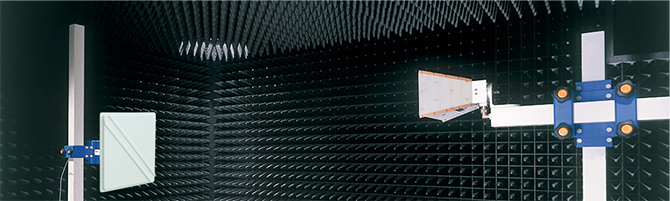
Industrial deployments frequently use directional or sector antennas to improve RF containment and aisle isolation.
Compared to wide omnidirectional propagation, directional antennas may:
- improve roaming boundaries,
- reduce excessive overlap,
- improve SNR stability,
- improve aisle separation,
- improve roaming consistency.
Controlled RF propagation often significantly improves mobile client behavior.
Fast Roaming Technologies May Help
Modern enterprise infrastructures often use roaming optimization mechanisms including:
- 802.11r fast roaming,
- PMK caching,
- 802.11k neighbor reporting,
- 802.11v assisted roaming.
These technologies may reduce roaming delays and improve mobility stability.
However, compatibility validation remains essential because some industrial devices may not fully support all roaming standards.
Validation Requires Real Mobile Testing
Roaming validation should always include real operational movement testing.
Testing should ideally include:
- warehouse movement paths,
- forklift operation,
- AGV routes,
- VoIP calls during movement,
- real application traffic.
Static RF measurements alone cannot fully validate industrial roaming performance.
Conclusion
Sticky clients and roaming failures are among the most important operational problems affecting industrial wireless environments.
Successful industrial Wi-Fi design requires controlled overlap, stable RF propagation, careful antenna placement, efficient airtime management, roaming optimization, and real operational validation.
Reliable industrial mobility depends not only on signal strength, but on predictable client behavior under continuously changing operational conditions.