






Roaming Optimization for Warehouse Terminals
Warehouse Wi-Fi networks must support continuous mobility while maintaining stable communication for barcode scanners, forklifts, tablets, industrial handheld terminals, and AGV systems.
Unlike stationary office devices, warehouse terminals frequently move between access point coverage cells while actively exchanging data.
This makes roaming behavior one of the most critical elements of industrial Wi-Fi design.
Even small roaming interruptions may cause:
- scanner delays,
- application freezes,
- voice communication drops,
- temporary disconnections,
- data synchronization issues.
In many industrial environments, stable roaming performance is more important than maximum throughput.
What Is Wi-Fi Roaming?
Roaming occurs when a wireless client moves from one access point coverage area to another while maintaining network connectivity.
The client device must decide:
- when to leave the current AP,
- which AP to connect to next,
- when signal quality has degraded sufficiently to trigger roaming.
This process is influenced by:
- signal strength,
- SNR quality,
- client device algorithms,
- roaming thresholds,
- AP configuration,
- coverage overlap.
Incorrect RF design may cause clients to remain connected to distant APs for too long or switch excessively between cells.
Warehouse Environments Create Difficult RF Conditions
Warehouses are among the most challenging environments for Wi-Fi roaming.
Typical RF problems include:
- metal storage racks,
- strong reflections,
- moving forklifts,
- changing inventory levels,
- long narrow aisles,
- large open areas.
Signal propagation may change dynamically throughout the day as inventory positions and machinery movement change.
This often creates unstable roaming conditions even when basic coverage maps appear acceptable.
Too Much Coverage Overlap Creates Roaming Problems
A common design mistake is assuming that stronger and wider coverage always improves Wi-Fi quality.
In practice, excessive overlap between access points may create:
- sticky clients,
- roaming delays,
- unnecessary AP scanning,
- higher retransmission rates,
- unstable roaming decisions.
Clients may continue communicating with distant APs even when better APs are already available nearby.
This behavior increases latency, airtime inefficiency, and packet loss probability.
Directional Antennas Improve Roaming Predictability
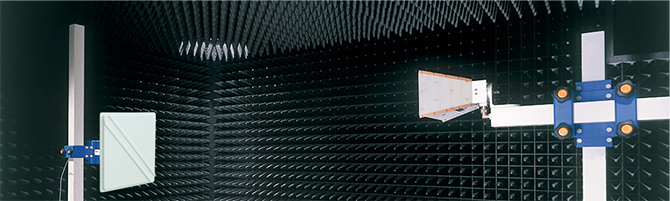
Industrial warehouse deployments frequently use directional or sector antennas to better control RF propagation.
Compared to wide omnidirectional coverage, directional antennas may:
- reduce excessive cell overlap,
- improve signal predictability,
- limit reflections,
- improve SNR stability,
- create cleaner roaming boundaries.
In long warehouse aisles, properly designed directional coverage often provides significantly better roaming stability than high-power omnidirectional deployments.
Roaming Delays Affect Real Applications
Industrial mobile terminals are often highly sensitive to temporary communication interruptions.
Even short roaming delays may affect:
- warehouse management systems (WMS),
- real-time inventory systems,
- VoIP communication,
- AGV navigation,
- industrial telemetry.
Some legacy barcode scanners may be particularly sensitive to roaming interruptions because of limited Wi-Fi chipset capabilities.
Client Devices Control Most Roaming Decisions
Many administrators incorrectly assume that access points fully control roaming behavior.
In reality, roaming decisions are usually made primarily by the client device itself.
This means roaming quality depends heavily on:
- client hardware,
- driver quality,
- device firmware,
- roaming aggressiveness settings,
- RF environment stability.
Different devices may behave very differently in the same Wi-Fi infrastructure.
Optimizing Roaming Requires RF Planning
Successful industrial roaming optimization usually requires:
- controlled cell overlap,
- careful antenna selection,
- stable SNR levels,
- proper AP placement,
- optimized transmit power,
- efficient channel planning.
Simply adding more APs often makes roaming behavior worse rather than better.
Industrial Wi-Fi Prioritizes Stability
Consumer Wi-Fi environments often prioritize maximum throughput.
Industrial deployments usually prioritize:
- stable communication,
- predictable roaming,
- low retransmission rates,
- minimal packet loss,
- reliable mobility under load.
Stable roaming performance is often one of the key indicators of a properly designed industrial Wi-Fi network.
Conclusion
Warehouse roaming optimization is primarily an RF engineering challenge rather than simply an access point quantity problem.
Controlled coverage, proper antenna systems, efficient airtime usage, and predictable RF behavior are often the key factors that determine roaming stability in industrial Wi-Fi environments.
Well-optimized roaming may significantly improve operational reliability for warehouse terminals, scanners, AGV systems, and industrial mobile devices.