






Industrial Wi-Fi Troubleshooting and RF Diagnostics
Industrial Wi-Fi troubleshooting often requires significantly deeper analysis than typical office or consumer wireless environments.
Warehouses, production halls, logistics centers, and industrial facilities create highly dynamic RF conditions where multiple overlapping factors may simultaneously affect wireless stability.
Because of this, effective diagnostics require understanding not only signal levels, but also real RF behavior, airtime conditions, roaming dynamics, and infrastructure interactions.
Industrial RF Problems Are Often Complex
Industrial wireless instability rarely has a single simple cause.
Operational problems may result from combinations of:
- reflections,
- interference,
- poor SNR stability,
- sticky clients,
- channel congestion,
- backend infrastructure delays.
Multiple minor RF problems may together create major operational instability.
Strong Signal Does Not Guarantee Stable Communication
One of the most common troubleshooting mistakes is focusing only on RSSI levels.
Strong signal strength alone does not guarantee reliable wireless communication.
Industrial Wi-Fi stability depends heavily on:
- SNR consistency,
- low retransmission rates,
- controlled overlap,
- stable roaming behavior,
- efficient airtime utilization.
Networks with strong RSSI may still perform poorly under operational conditions.
Retransmissions Often Reveal Hidden RF Instability
High retransmission levels frequently indicate underlying RF problems.
Retransmissions may result from:
- multipath reflections,
- co-channel interference,
- hidden node conditions,
- poor antenna placement,
- unstable client roaming.
Monitoring retransmissions often provides more useful operational insight than simple throughput tests.
Roaming Problems Are Common in Industrial Environments
Mobile industrial devices continuously move between access point coverage cells.
Roaming instability may create:
- communication interruptions,
- VoIP drops,
- scanner delays,
- telemetry instability,
- AGV communication problems.
Sticky clients and excessive overlap are frequent causes of roaming instability.
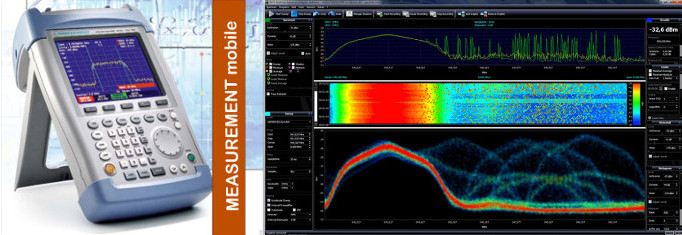
Spectrum Analysis Helps Identify Non-Wi-Fi Interference
Many industrial RF problems are invisible during standard Wi-Fi scanning.
Spectrum analysis may help identify:
- electromagnetic interference,
- unexpected RF emissions,
- industrial noise sources,
- intermittent interference,
- channel instability.
Professional industrial troubleshooting often requires deeper RF analysis tools.
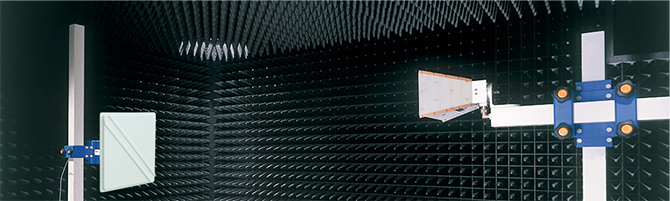
Directional Antennas Improve RF Predictability
Industrial deployments frequently use directional or sector antennas to improve RF control.
Compared to wide omnidirectional propagation, directional antennas may:
- reduce reflections,
- improve aisle isolation,
- limit excessive overlap,
- improve SNR stability,
- improve roaming predictability.
Proper RF control often significantly simplifies troubleshooting and improves operational stability.
Airtime Congestion May Be Hidden
Industrial wireless problems are not always visible through throughput testing alone.
High airtime utilization may still exist even when speed tests appear acceptable.
Airtime congestion may increase:
- latency,
- jitter,
- retransmissions,
- roaming delays,
- client responsiveness problems.
Industrial diagnostics should therefore analyze airtime efficiency directly.
Infrastructure Problems Also Affect Wi-Fi Stability
Wireless instability is not always caused purely by RF conditions.
Infrastructure problems may also affect operational performance, including:
- switch congestion,
- PoE instability,
- authentication server delays,
- controller overload,
- fiber uplink problems.
Industrial Wi-Fi troubleshooting should always include full infrastructure analysis.
Real Operational Testing Is Essential
RF behavior in industrial environments may differ significantly between idle and operational conditions.
Effective troubleshooting should ideally include:
- moving forklifts,
- active machinery,
- real client density,
- normal production traffic,
- actual production devices.
Problems invisible during idle testing may become severe during full operation.
Conclusion
Industrial Wi-Fi troubleshooting requires deep analysis of RF behavior, airtime efficiency, roaming dynamics, retransmissions, and infrastructure interactions.
Successful diagnostics depend not only on signal measurements, but on understanding how wireless systems behave under real operational conditions.
Stable industrial Wi-Fi requires predictable RF engineering, controlled infrastructure design, and continuous validation of operational wireless performance.